
Back to the Future: Personal Rapid Transit
Airports, Colleges, Cities?

I recently found myself in Morgantown, West Virginia — and knew I had to try the famous Morgantown PRT system.
The system — a line, really — is in effect a roughly 5 kilometre, 5-stop rapid transit line running through the city, along the Monongahela River and to various buildings of West Virginia University.
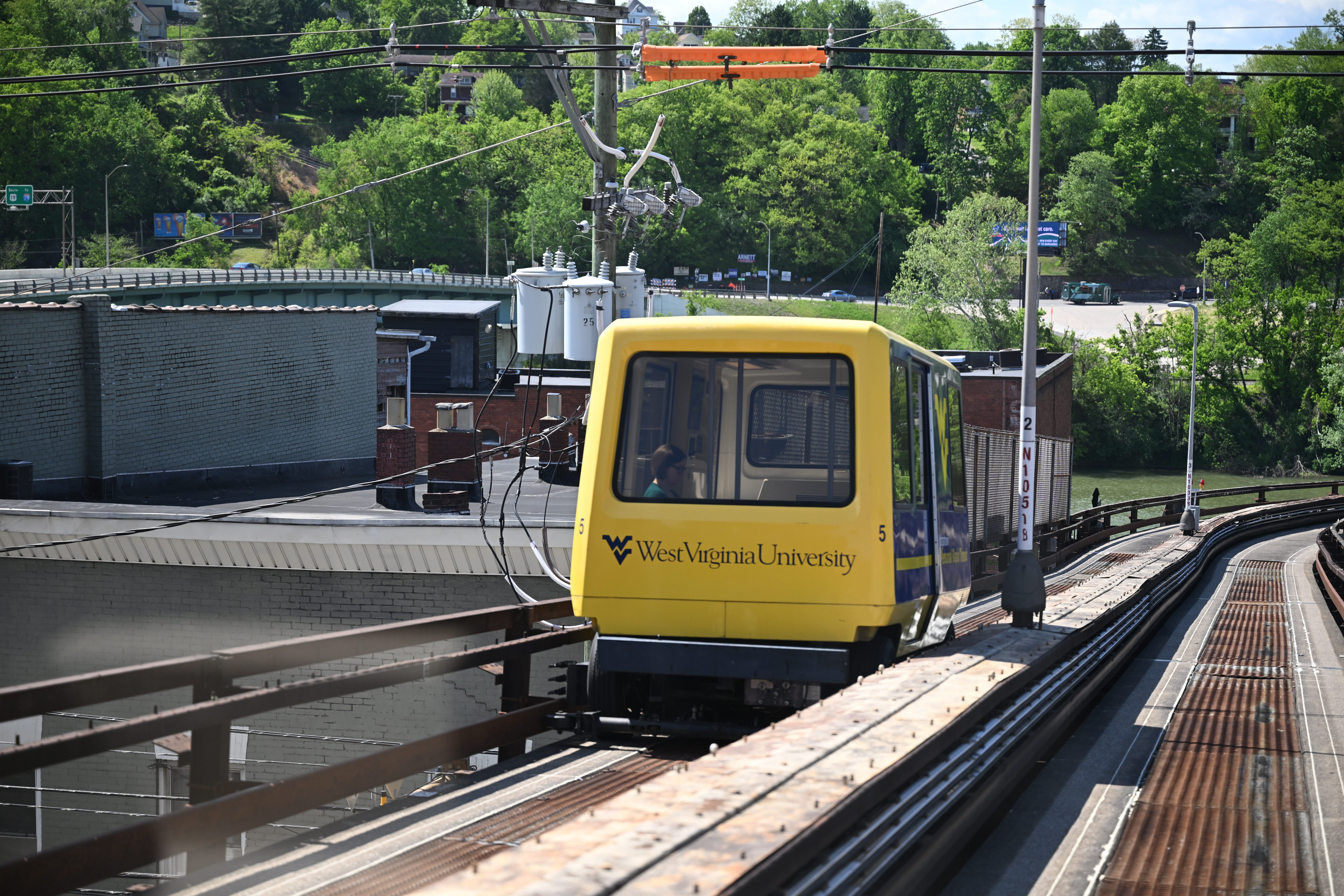
To a sort of uneducated observer, the system basically would look like an automated people mover you’d see at an airport: rubber-tired cars run up and down a concrete guideway that runs grade-separated from traffic, often on elevated structures. But to someone familiar with such systems, the oddities are impossible to ignore.
The cars are just that: single cars the size of mini-buses which sometimes run alone and sometimes in packs, queue up at stations.
Theres something a bit uncanny watching the “tracks” and noticing there isn’t really a regular service pattern, because for much of the day, vehicles go when people decide to travel. This means you might get nothing for five minutes and then four vehicles all going one way one after the other.
And those stations are unusual. Most have bypass tracks, but there are also numerous platforms at each (somewhat surprisingly without screen doors), sometimes with as many as a dozen vehicles sitting at them, and periodically arriving and departing. The tracks at the stations also point every which way, and flyovers and ‘unders abound.
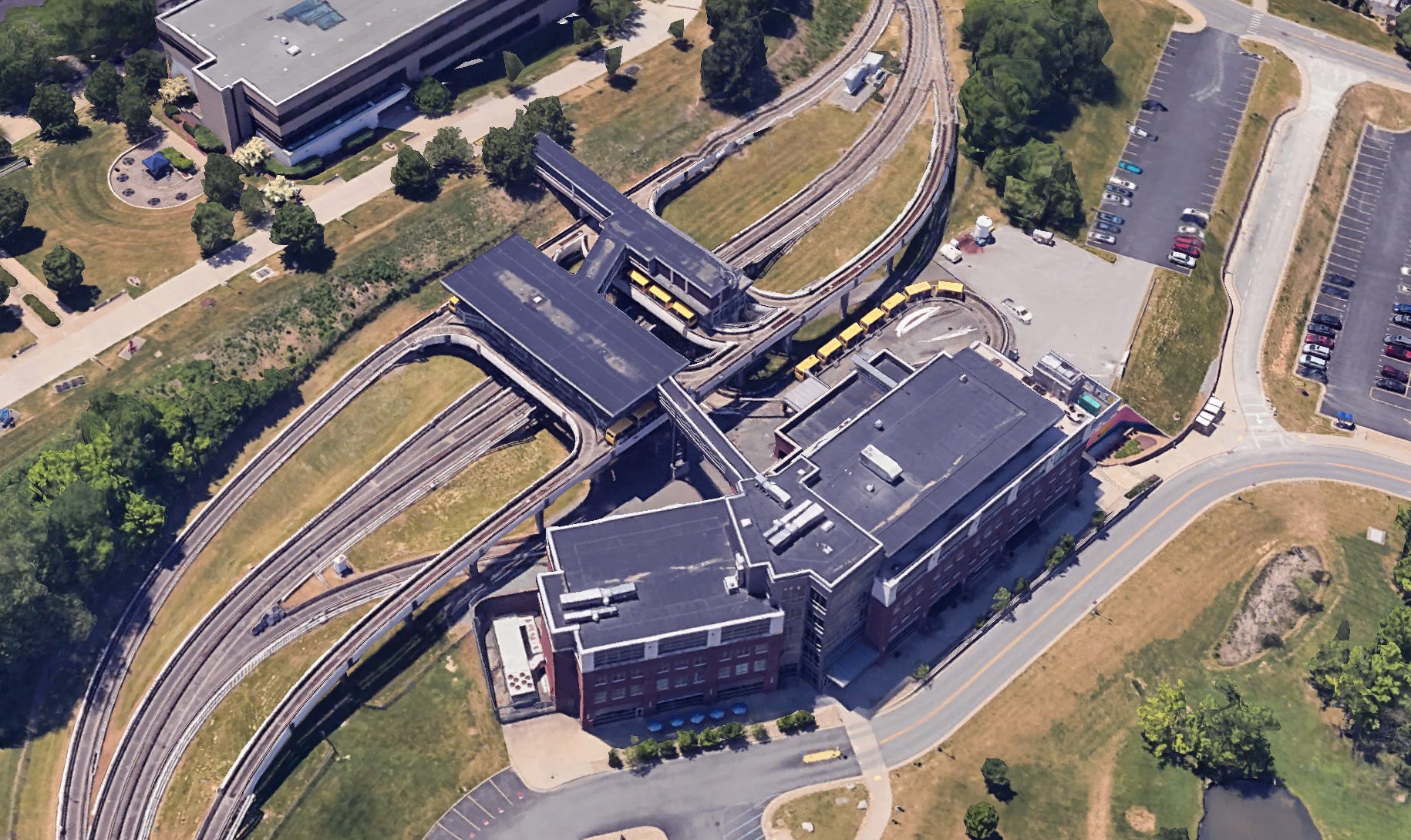
When you go through a turnstile (the line was free when I tried it, which is sure to excite some, even if free transit remains a dubious prospect, though I suppose if the alternative is needing exact change in coins in 2026 then free might be less crazy), you select the station you are heading to, and then a vehicle arrives to take you there … directly, and quite possibly by yourself. That’s really what makes “personal” rapid transit unique — you choose a destination and a trip is provided specifically for you, not stopping at intermediate stations.
There’s something real and hard to explain about the magic of actually using a PRT system. It’s sort of like a 1000x-ing of the feeling you get when you get something out of a nifty robotic vending machine: Something about a massive transit system sized machine personally serving you with all its mechanical might is just incredible.
Riding the system, which turned 50 last year, is absolutely remarkable; it’s quick, automated, and feels efficient — I can only imagine how much it must have felt like the future in the 1970’s.
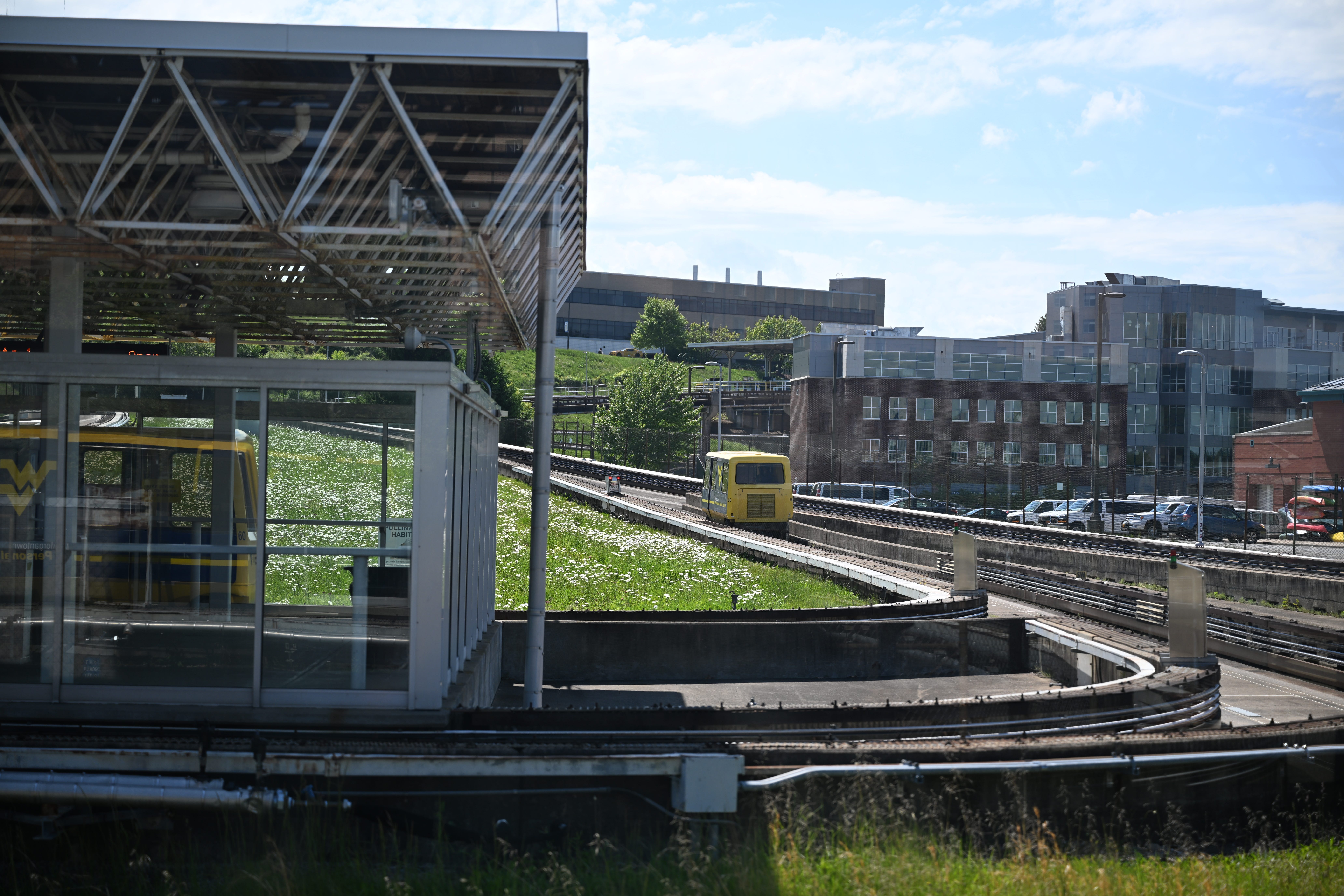
Unfortunately now, it mostly feels like the past. The stations as I mentioned don’t have screen doors, and they barely have wayfinding either. I hope you like stairs because there are no escalators to be found. And the ride quality is shockingly bad for fixed guideway transit, especially without a driver to press stop if the rocking and bumping throws you off your feet, or honestly, out of your seat (yeah it’s that bad, surprisingly so even with rubber tires often giving a system a “bouncy” feeling). I’ve certainly seen guideways that look worse, but this system had multiple sections where two bits of guideway came together where the vehicle had to basically slam into (or drop off of) and bounce over a visible vertical alignment gap between sections. While the vehicles seem to be in decent condition, the guideway alone makes me think this system might not be around long; ride it while you still can!
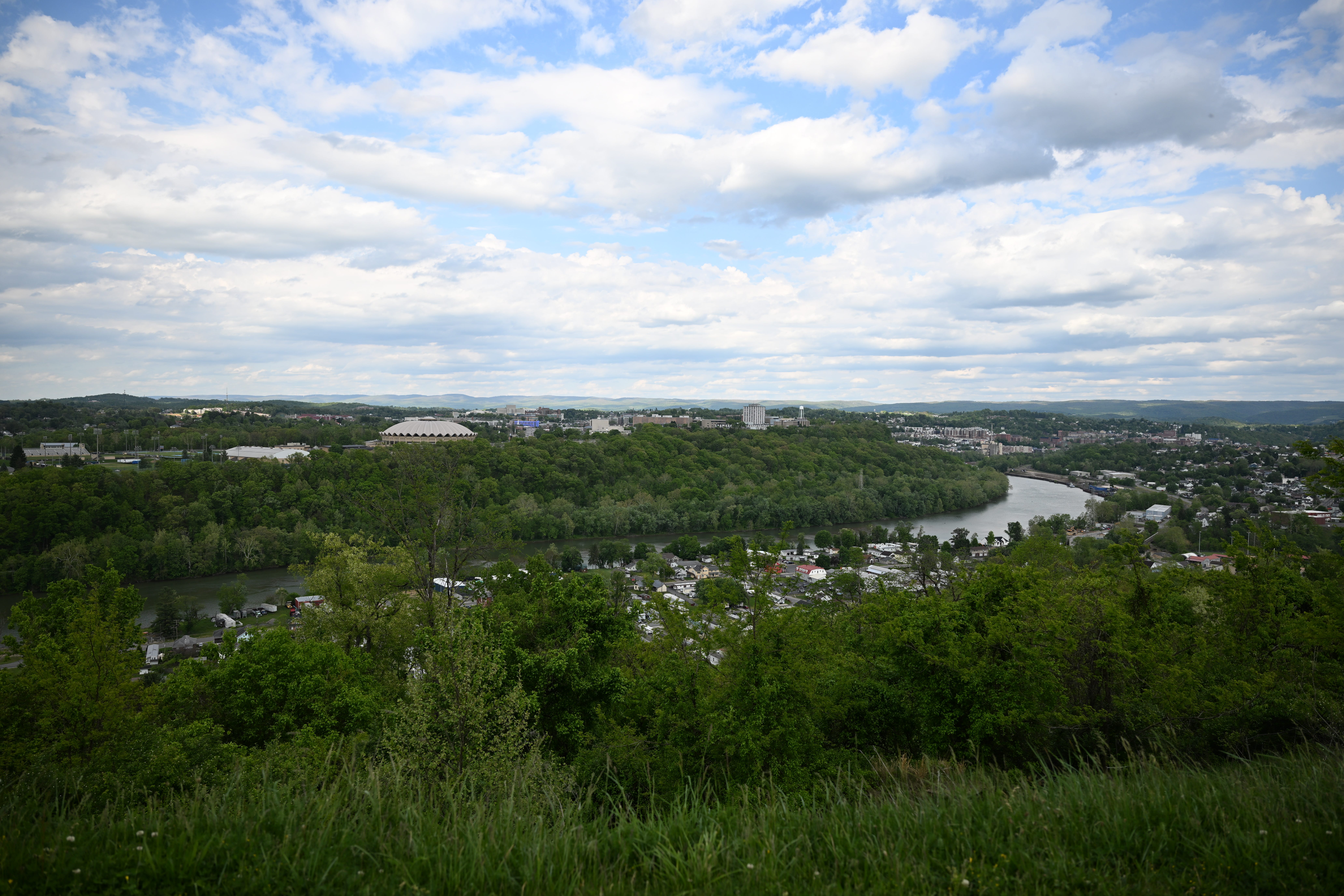
That this thing isn’t exactly the backbone of transport in the city was apparent from when we arrived: traffic was bad, parking was plentiful and free (and I don’t think I’ve ever seen so many massive new parkades in such a small city), and while at first I was impressed by the throngs of people using the Medical Center station, upon closer observation the reason I wasn’t seeing more vehicles operating is because while I saw about five people use the PRT, the throngs were actually just passing through the station from the hospital to get to the parking. At least I did also see some public buses (albeit serving a transit “center” with no benches or schedules) which were wrapped with PSAs suggesting some sort of transit funding ballot was passed semi-recently.
And I don’t entirely blame them: while the system is cool, it doesn’t seem like its really gotten all that much better in the last 50 years, in fact it might have gotten worse!
Meanwhile in that same time …
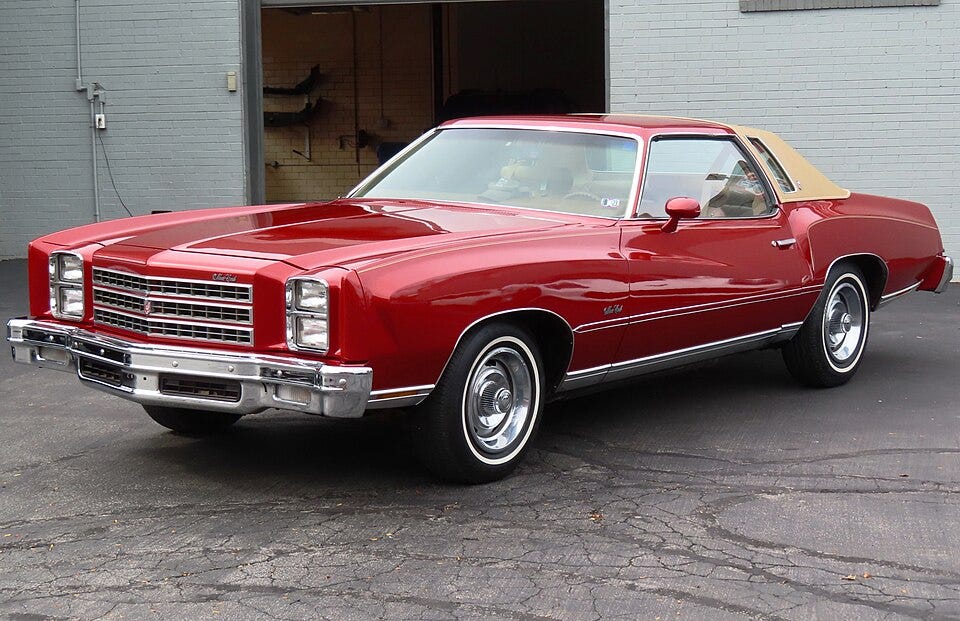
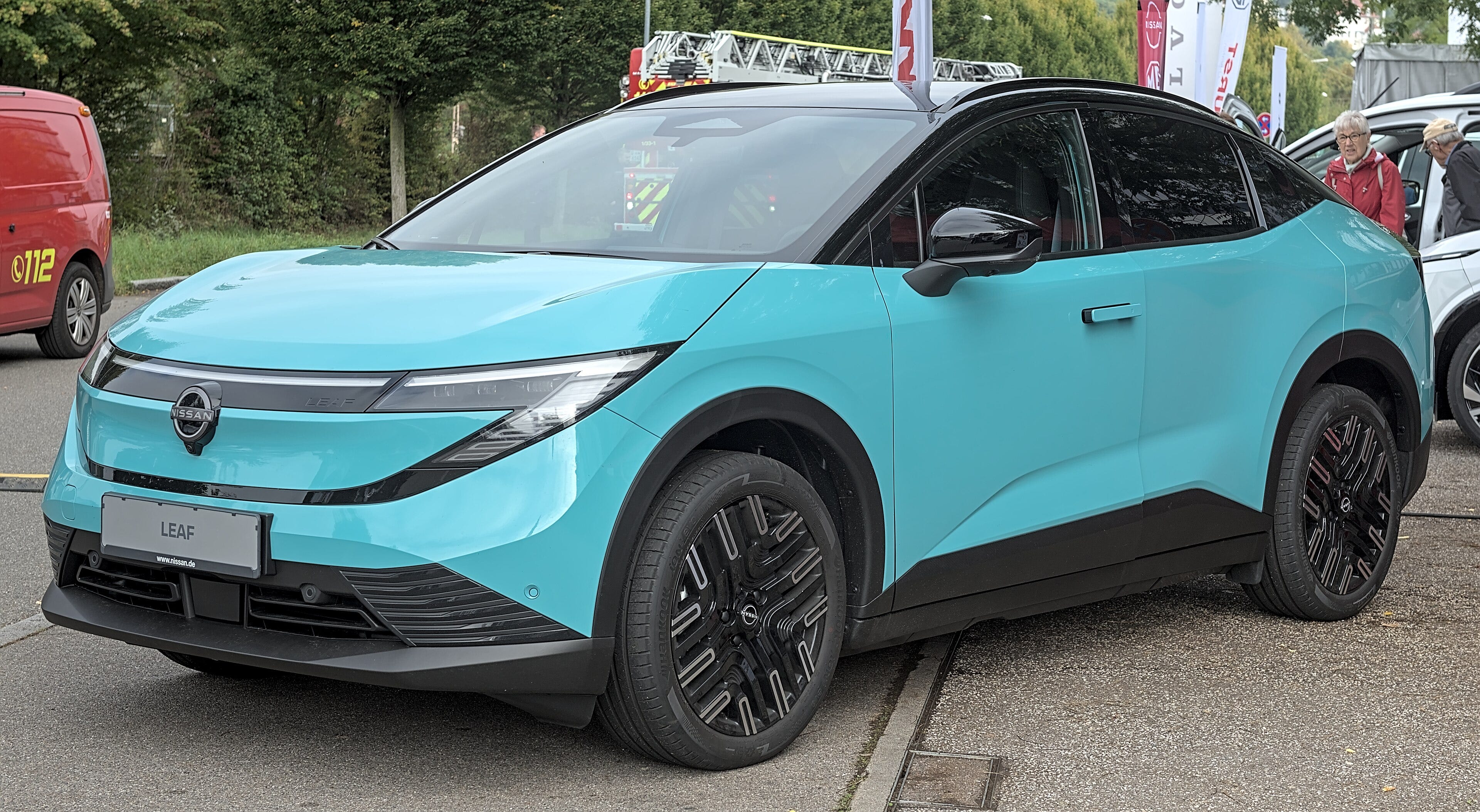
The reality is, putting aside the rough shape the system is in (kudos to those keeping it running at all, it seems like a small miracle), the whole PRT aspect doesn’t even make sense. Some of the time the line runs fixed routes between major stations based on historic demand, and at other times it runs like a conventional rapid transit line, stopping and picking up passengers at all stations.
This is probably not helped by the rather large vehicles, which Wiki has suggested enthusiasts have classed as group rather than personal rapid transit.
It does feel smart that stations are designed as to enable sort of conventional and personal operations, but this also makes the intermediate stations ridiculously gigantic, with bypass “tracks”, numerous platforms, and lots of turnaround routes.
And this hits on the painful reality — there is just no good reason for this to be PRT. All of the stations are connectedly linearly so the only “benefit” of PRT is 1) not forcing you to stop at intermediate stations and 2) allowing you to get on an empty vehicle at an intermediate station (so long as the system is in “PRT Mode” when you ride).
The issue is, these “benefits” are not real: the services take corners so slowly and have to run so slow in sections to navigate complicated tracks that I think a “smoother” alignment with regular trains stopping at all stations (which would have screen doors) would be at least as fast — probably faster. This would also ultimately be way higher capacity than the “terminate and begin journeys at any station option. The benefits of PRT are mostly about vibes and denying the efficiency of conventional mass transit so people don’t have to share space with someone different from them or look at a map of a line. Even the supposed immediacy is questionable, because on several of my and others journeys I observed a five minute timer start when passing through the turnstiles to try and “batch” trips. And half-decent rail or people mover service would come frequently enough for you to never wait like that, and the stations would probably also be smaller even with additional capacity.
Now, Morgantown was in some senses only the first major PRT system, and later systems have come along and made major improvements that address some of the issues here.
The most obvious of these is the ULTRA PRT at Heathrow Airport, which people love (probably because it’s much more accessible to a large number of people, as anyone in London can go to Heathrow Terminal 5 and try it for free).
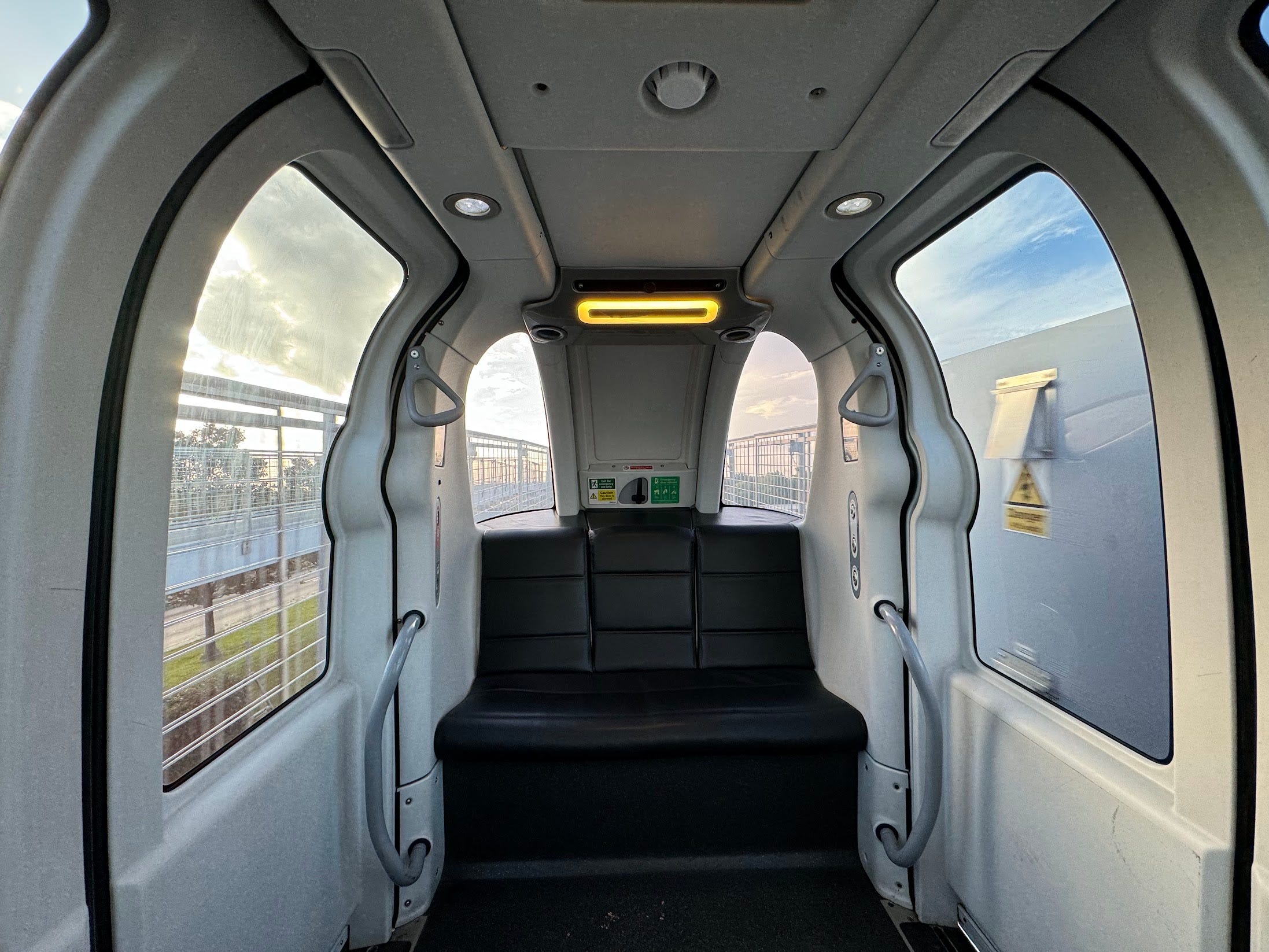
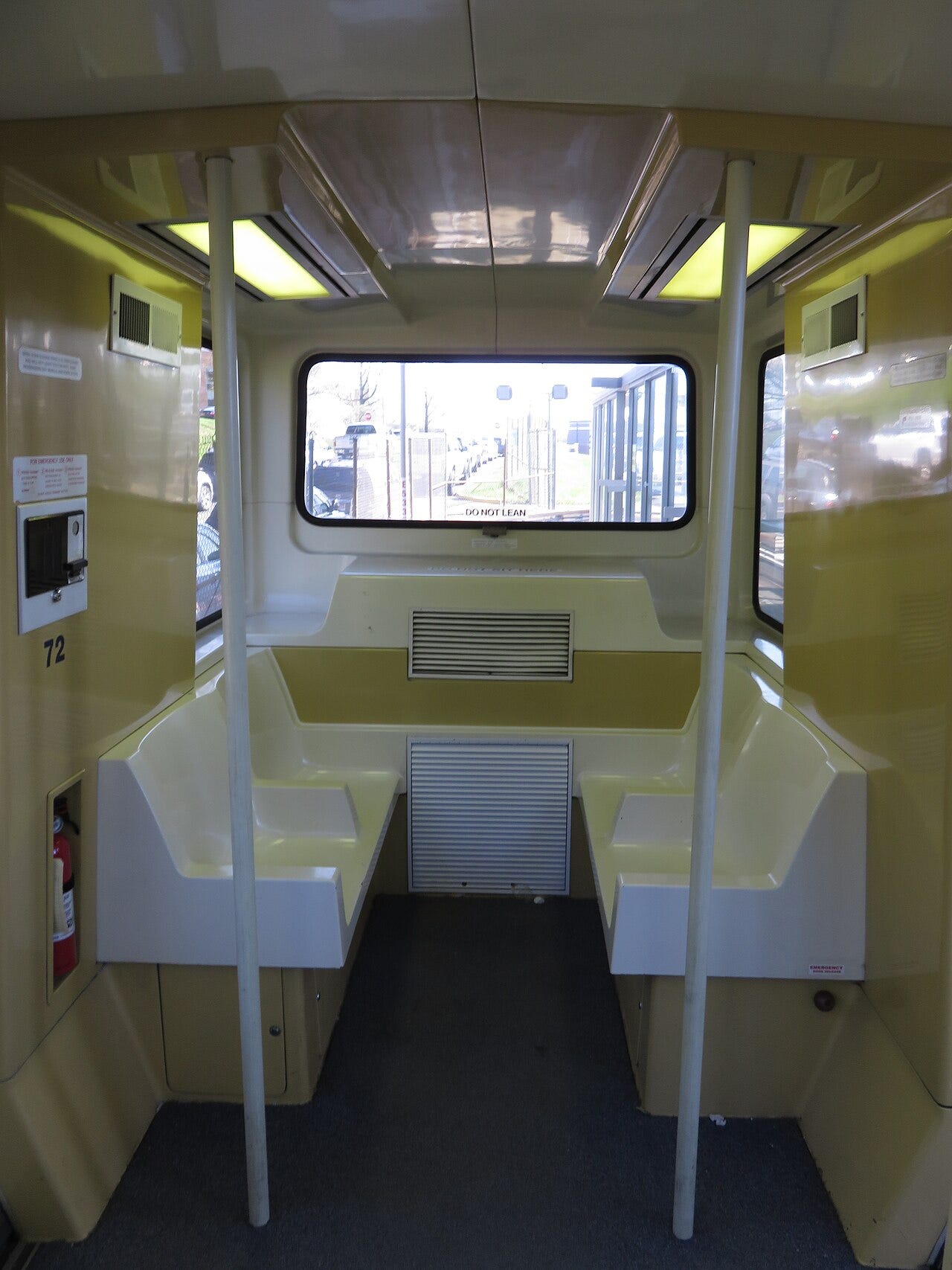
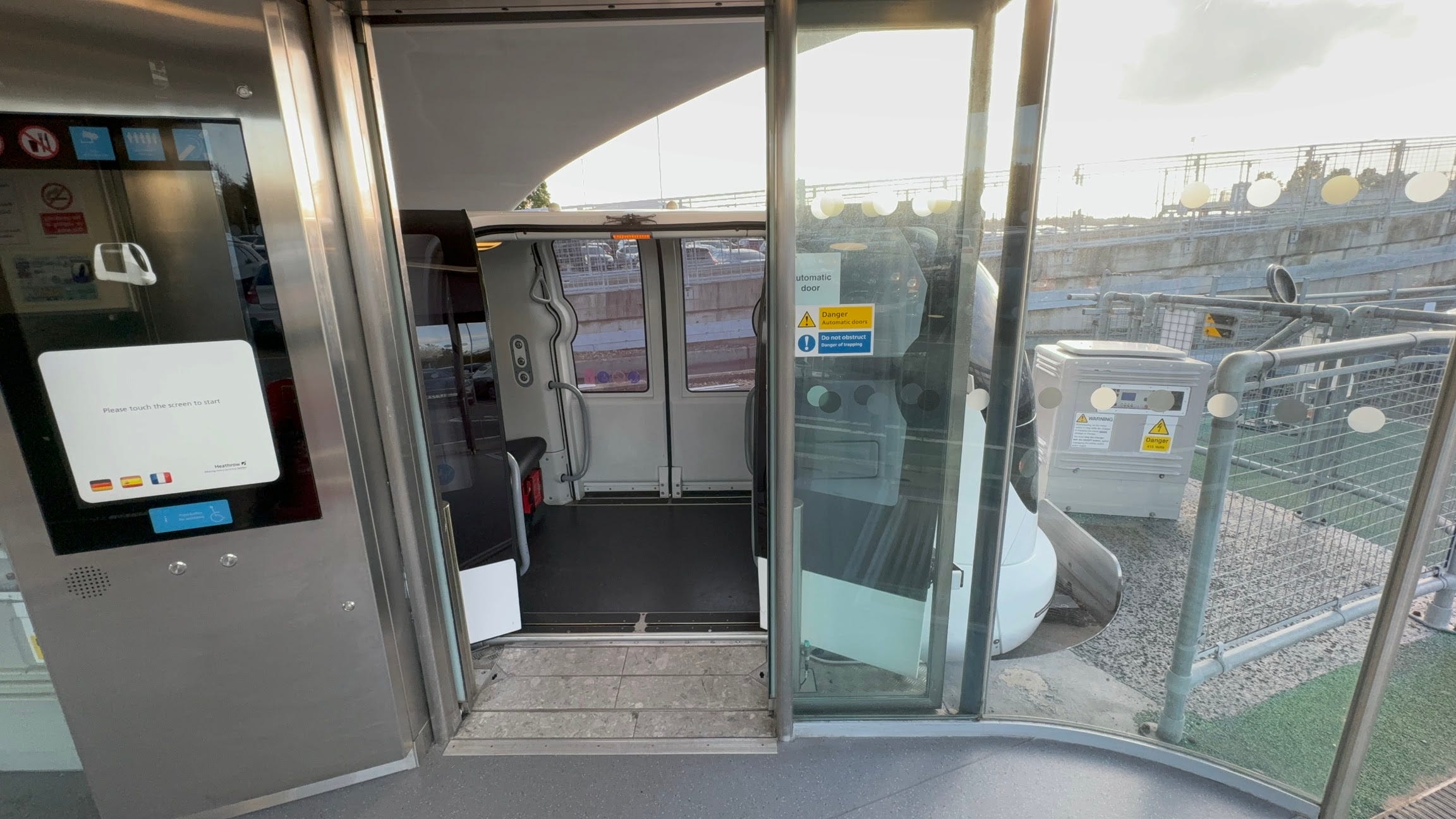
ULTRA for one is way lighter weight. The Morgantown PRT is powered by subway-style third rail, and has cars with a loading gauge (profile) not far off a light metro, so the structures are big and the curves are relatively wide. ULTRA vehicles are truly personal and closer to the size of a golf cart (with a small onboard battery); this means the elevated guideways needed for them are also much simpler.
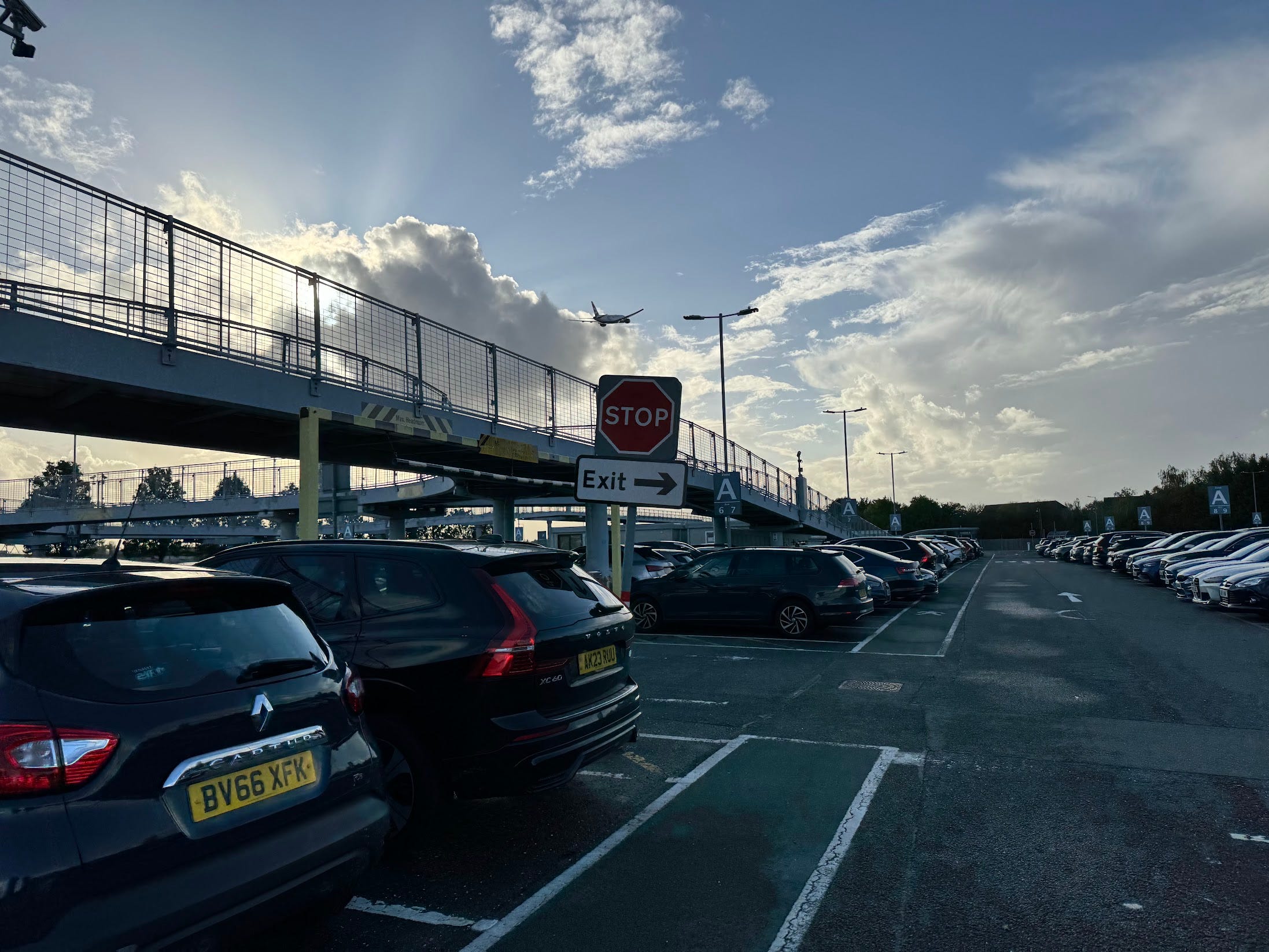
The stations are also quite different. ULTRA’s might be a tenth the size both because the vehicles are smaller and because they are more manouverable, meaning they can simply back out of a “platform” at a station (they are angled at roughly 45 degrees like some street parking you might have seen) and onto a “mainline”. This cuts the need for bypass tracks and redundant station tracks.
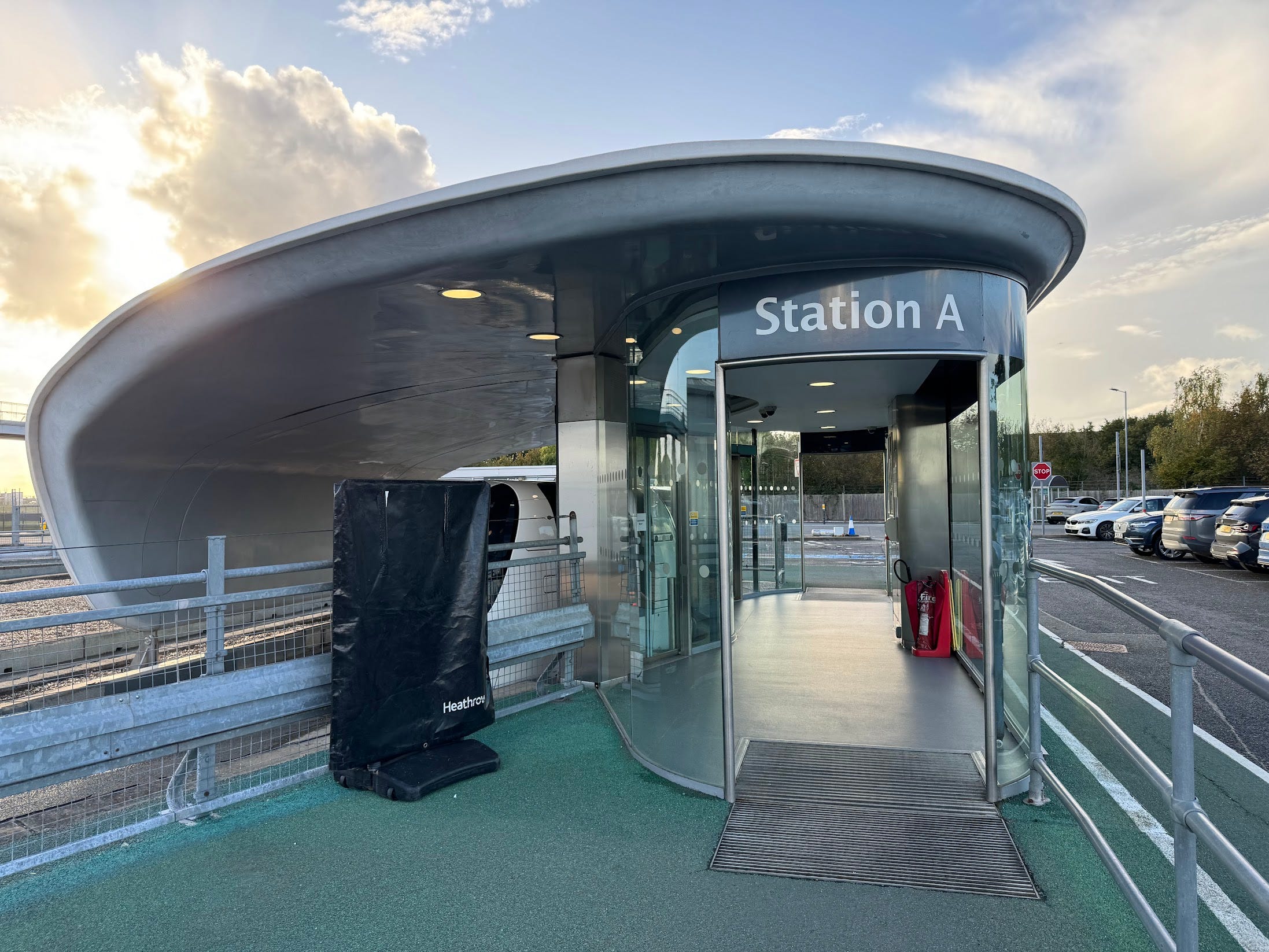
And then everything is just nicer, the UI at stations is good, and the vehicles are more pleasant. Oh, and the PRT thing makes some sense because there are multiple interconnected destinations that are not in a line.
There’s bad news though. Despite improving on literally everything from Morgantown by being clever and using modern technology to drive down costs, only one ULTRA system has been built and I doubt it gets more use than America’s mountain pod system.
And I mean, those are the balance of operating PRT systems in the world. It’s usually not a good sign when most of your kin are on the brink of shutting down, or were just never opened.
There is maybe hope though. The technology never really seemed like the problem here, it was the scale and application. Done wrong, PRT is just a parking lot shuttle or a glorified bespoke automated people mover, but that could change. Large tech, medical, or academic campuses, airport terminals, or giant malls or convention centres all seem like prime candidates — but these are different clients than cities with different needs and constraints, and so looking at PRT like conventional transit is probably a bad idea. This also isn’t replacing transit, it’s augmenting it, like a 3D elevator.
Whether these systems ever reach escape velocity is yet to be seen. The most likely contender to pull it off appears to be Sillicon Valley based Glydways which has projects on the books, money and seemingly another round of technology refinements. Watch and wait.
Maybe this is what Vegas should have built instead of Elon's stupid deathtrap car tunnel.
I think the roll-out of driverless cars really changes the potential for PRT. Instead of requiring a fully grade-separated system with exclusive pods, you can be more flexible with the infrastructure.
It becomes more like (non-)BRT in that it can run on various degrees of dedicated guideways/lanes, with closed and open service concepts. With the lack of a driver allowing for smaller vehicles, more service patterns and higher frequencies compared to current bus service.